 Daniel Mitchell
Key Takeaways
- F31 means the steam generator sensor reads outside its range; conventional bake, broil and convection modes still work.
- Mineral scale is the most common cause, and a descaling cycle with the agent and strength your manual names can clear it.
- A failed sensor is a smaller repair than a failed generator element, which needs a full generator replacement on most KOSC models.
- Stop steam use if water leaks from the oven bottom or if F31 persists after a completed descale.
- Filtered water extends the interval between F31 faults significantly.
The Bottom Line
Descale first and refill the tank before paying for anything. A generator replacement is worth it on a healthy oven that you use for steam; it is harder to justify on an older oven or one you rarely steam with.
A steam wall oven has one part a conventional oven does not: the steam generator, a small heated chamber that turns water from the tank into steam. On a KOSC the fault shows as F31. It is also the part that fails first, usually because of hard water, and when it does the oven keeps baking while every steam function goes dead. That split is what makes the repair decision unusual. Nothing is urgent, the oven still works for most cooking, and the question is whether the generator is worth the money to a household that actually uses steam.
| What you find | What it points to | Verdict |
|---|---|---|
| F31 clears after a descaling cycle | Mineral scale on the generator sensor | Fixed; descale on a schedule |
| F31 returns right after a descale | Failed NTC or thermostat sensor in the generator | Repair; a smaller job than the generator |
| Steam output has faded over months, then F31 | Scale, then a weakened generator element | Descale first, then diagnose |
| Heating element in the generator has failed | Full generator replacement on most KOSC models | Weigh against age and steam use |
| Water leaking from the oven bottom | Seal or generator fault | Stop steam use and book service |
What Does F31 Mean on a KitchenAid Steam Oven?
It means the steam generator's temperature or water-presence sensor is reading outside its expected range, so the control locks out steam. Our oven F31 page covers the KOSC steam wall oven series and rates it medium severity. The control watches that sensor throughout steam operation to confirm the generator is heating safely, and when the signal is wrong it aborts the cycle, often within the first three minutes.
A related code, oven F30, simply means the water tank is empty or below the minimum level. Refill it before assuming anything has failed.
- A steam cycle that starts and stops inside three minutes — the generator heats briefly, then the control cannot confirm it is operating correctly.
- Preheat works, but no steam appears on request — the convection side is fine and the steam circuit has been disabled.
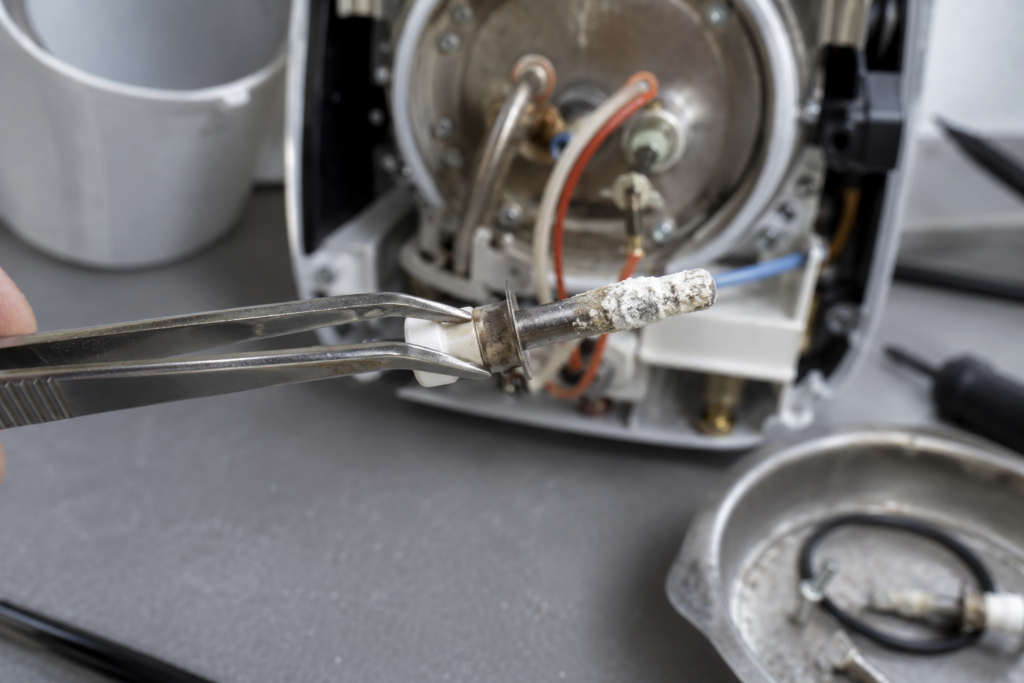
- Steam output fading over months before the code — the signature of scale building on the sensor.
Is a KitchenAid Steam Oven Generator Worth Fixing?
Yes if the cause is scale or a failed sensor, and it depends on age and use if the generator element itself has failed. The first two are inexpensive and often cleared without replacing anything, while a failed heating element requires a full generator replacement on most KOSC models, according to the code page. A built-in steam oven is a premium appliance, and the site puts the design life of most KitchenAid appliances at 10 to 15 years, so weigh the repair against the age of the oven and be more selective as it nears the top of that range.
The cabinet matters too. A wall oven sits in a cutout of specific dimensions, and a replacement with different dimensions can need cabinet work, which tips many decisions toward repair. Our is it worth repairing a KitchenAid wall oven guide covers the oven as a whole.
- Age of the oven — a younger oven favors repair, and the site's design life of 10 to 15 years is the scale to compare against; be more selective near the top of it.
- Which part failed — scale and a sensor are small jobs, a generator element is the big one.
- How much you steam — the repair only has value if the function gets used.
Ask the technician to say which of the three it is before ordering anything. The price gap between a sensor and a full generator is wide enough that the diagnosis, not the part, is what you are really buying, and a vague answer such as steam generator fault is not specific enough to approve.
What You Can Do Before Paying for a Repair
Run the descaling program, because scale is the most common reason for F31 and the cheapest to remove. Check your KOSC owner's manual for the cycle, which many KitchenAid steam models offer in the settings menu, and use only the descaling agent and concentration it specifies. Our code page warns that an incorrect concentration can damage the generator lining.
- Refill and inspect the water tank — look for heavy scale, discoloration or floating particles.
- Run the built-in descaling cycle with the agent and strength the manual names.
- Switch to filtered water after descaling; it extends the interval between F31 faults significantly.
- Try a steam cycle again and note how long it runs before any code reappears.
If F31 clears and stays away, the repair was a cleaning job. If it comes back immediately, the sensor or the element has failed.
Can You Keep Using the Oven While F31 Is Showing?
Yes for conventional cooking. Bake, broil and convection modes are unaffected, and only the steam and steam-combination functions are blocked until the generator sensor is serviced. That is why a steam oven repair can often wait for a convenient date.
- Keep baking and broiling — the code page says conventional modes are safe to use.
- Stop steam attempts if water leaks from the oven bottom during or after a steam cycle.
- Do not keep running steam cycles after F31 persists through a completed descale; the fault returns on each attempt.
When Replacing the Generator Stops Making Sense
The honest test is how much you cook with steam. A household that bakes bread and reheats with steam several times a week gets full value from a new generator, and a household that never touched the steam button is paying to fix a feature it does not use. In that case a modest sensor repair, or simply living with conventional modes, may be the sensible outcome.
Age and history change the calculation. A generator replacement on an oven with other issues, such as a latch motor or a board that has already been repaired, is a different decision from one on an otherwise healthy oven. Our KitchenAid wall oven repair or replace guide walks through the full framework.
Keeping the Next Generator Alive
Whatever is done now, the same water will be in the tank next month. Filtered water is the single most effective change, and a descale on a regular schedule keeps the sensor from drifting. If you live in a hard-water area, treat the descaling program as routine upkeep rather than a response to a code.
Getting a Diagnosis
A technician can tell scale from a failed sensor from a failed element, which decides the price. Contact one if descaling does not resolve F31, or if you see water at the oven bottom. The KitchenAid oven repair page lists what a visit covers, and the final price is confirmed after on-site diagnosis, with a written estimate before any work begins. Book a visit or send us the model number and whether F31 returns right after a descale.