 Daniel Mitchell
Key Takeaways
- Converting a gas range between natural gas and propane requires certified professional installation; DIY conversion is dangerous and voids the warranty.
- A proper conversion uses a genuine kit matched to the model and replaces every burner orifice and the regulator.
- A half-converted range can still light, with flame problems, carbon monoxide risk and gas accumulation as the hidden hazards.
- Verify every burner flame, a leak check on all connections and an updated rating plate, and keep the written certificate.
- If you smell gas, evacuate, avoid switches and flames, and call the utility from outside.
The Bottom Line
Have any natural gas to propane conversion done by a certified professional with a matched kit, then check the flames, the leak test and the rating plate before you cook.
Moving a gas range from natural gas to propane looks like a small job: a kit in a box, a few screws and a tank on the side of the house. It is not a small job. A KitchenAid range LP conversion changes the way every burner mixes gas and air, and the difference between natural gas and propane is large enough that getting it slightly wrong produces a flame that looks fine and a kitchen that is not. This guide explains what the conversion involves, why it belongs to a certified professional, and how to check a range you did not convert yourself.
| Situation | Why it matters | What to do |
|---|---|---|
| Moving to a home with propane | A range set up for natural gas cannot simply be connected to LP | Have it converted by a certified professional first |
| Bought a used range | You may not know which fuel it was last set up for | Check the rating plate and ask for the paperwork |
| Converted by someone else years ago | Every orifice has to have been replaced, not most of them | Ask for a leak and flame check |
| Odd flames or a gas smell after conversion | The conversion may be incomplete | Stop using the range and leave the area if you smell gas |
What Does a KitchenAid Range LP Conversion Involve?
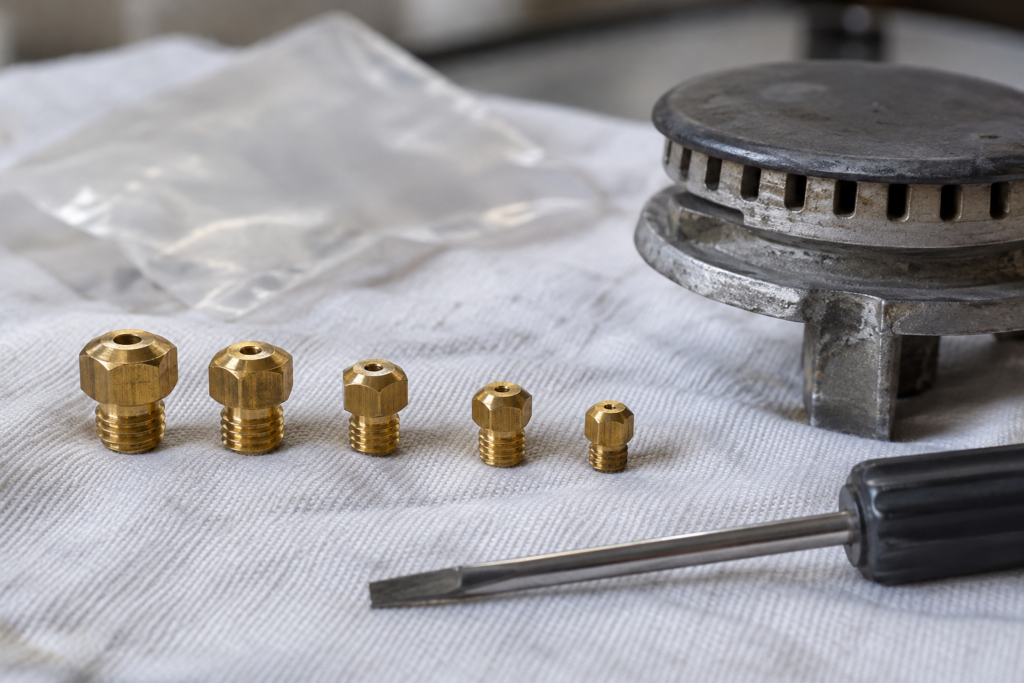
It involves more than a kit. According to our LP conversion safety notice, a proper conversion needs a genuine KitchenAid conversion kit matched to your specific range model, replacement of every burner orifice with an LP-sized one, and conversion or replacement of the regulator for the right pressure. It then needs a flame check on every burner, a leak check on every gas connection, and an update to the rating plate so it shows LP operation.
- A kit made for your exact model — kits are not interchangeable between ranges.
- All orifices replaced — not just the ones that are easy to reach.
- Regulator converted or replaced — propane needs its own pressure setting.
- Every burner flame verified after the work, not only one or two.
- A leak check on all connections before the range is used.
- The rating plate updated so the next owner knows what the range is set for.
Why Is DIY LP Conversion Dangerous?
Because natural gas and propane behave differently, and a range tuned for one is unsafe on the other. The notice explains that propane operates at higher pressure and requires different orifice sizes at each burner, and that converting without replacing all orifices and adjusting the regulator creates flame problems, carbon monoxide risk and the potential for dangerous gas accumulation. It also says DIY conversion voids the warranty.
The trap is that a half-converted range can still light. The burners ignite, the flame looks plausible, and nothing announces that the mix is wrong until the problem has been present for some time. That is why the advice is blunt: never attempt a DIY conversion, even with gas experience. Experience with gas lines does not replace the right kit, the right orifices and a post-conversion test.
Think of the conversion as a system change rather than a part swap. The orifices control how much gas reaches each burner, the regulator sets the pressure behind them, and the rating plate records the result. If any one of the three does not match the fuel, the range is not set up for it, however well it lights. That is also why partial or shortcut conversions are the dangerous ones: they leave one of the three out of step with the other two.
Who Should Do the Conversion
A certified professional with the right kit for your model, who will test the work afterward. Ask for the genuine OEM kit to be used, for every burner flame to be checked, and for the leak test to be done before you cook. Our KitchenAid installation and setup page describes the installation work, and the safety notice says the installation service performs LP conversions with post-conversion testing and a written certificate, but the installation page does not list conversions, so ask what the visit includes when you book.
It is reasonable to ask the installer before the visit what the job will include, how long it takes and whether the range will be tested with gas flowing before they leave. A professional will have answers, and an installer who is vague about orifices or the regulator is a reason to look elsewhere.
If you are given a certificate, keep it with the range's manual. It is the record that tells a future technician, an inspector or the next owner what fuel the range is set for.
What Not to Do
The rules are short, and each one exists because someone skipped it.
- Never run a natural-gas range on propane without a full conversion.
- Never skip an orifice — all burners have to be converted together.
- Never attempt the conversion yourself, however much gas work you have done.
- Never ignore a smell of gas after any gas work on the range.
How Can You Tell Whether a Range Is Set Up for Propane?
Look at the rating plate, and ask for paperwork. A correctly converted range has its rating plate updated to show LP operation, and a professional conversion comes with a written certificate. If the plate says natural gas and the range is connected to propane, or if nobody can tell you how it was set up, do not use it until a certified technician has checked it.
If you smell gas at any time, follow the emergency steps in our KitchenAid gas range safety guide: evacuate, avoid switches and flames, call the utility from outside, and wait for the all-clear. Do not try to diagnose it yourself.
What to Check After a Conversion
Before you rely on the range, confirm the work was completed. This takes a few minutes and uses only your eyes and the paperwork.
- Light every burner and look for even, steady flames with no lifting or flicker.
- Ask to see the leak check on the gas connections.
- Read the updated rating plate and keep the written certificate.
- Report any ignition trouble that appears afterward; our KitchenAid range burner not igniting guide covers the usual causes, but a conversion is a reason to call the installer.
Getting Help
If you are about to move, buy a used range or switch fuel, arrange the conversion before the range is connected. The KitchenAid range repair page covers service on gas ranges, and the range and oven maintenance guide covers upkeep afterward. The final price is confirmed after on-site assessment, with a written estimate before any work begins. Book a visit or tell us the range model and which fuel you have.