 Daniel Mitchell
Key Takeaways
- CP names three different faults: a failed start relay or capacitor, an overload tripped by overheating, or a failed compressor motor.
- A loud click about once a minute is the signature of a start problem, not necessarily a dead compressor.
- Clean the condenser and leave the machine unplugged for thirty minutes to let the overload reset.
- Limit restart attempts to one or two; each failed start stresses the windings.
- A failed compressor is a sealed-system repair approaching replacement cost, so compare the written estimate with a new machine.
The Bottom Line
Repair a start-circuit fault or an overload that recovers after cleaning. If the compressor itself has failed, set the written estimate beside the price of a new machine, especially on an older unit.
A built-in ice machine that stops making ice and shows CP has a compressor problem, but the word compressor covers three very different situations. In one the compressor is fine and a small part that starts it has failed. In another it is tripping its own protector because it overheats. In the third the compressor itself has died, and that is the only one that raises a real question about replacing the machine. This guide helps you tell them apart before you pay, and the ice maker repair cost guide shows what the other repairs on these machines cost.
| Cause on the CP page | What it means | Repair or replace? |
|---|---|---|
| Start relay or capacitor failed | The compressor cannot get started and keeps tripping its overload | Repair: small parts, quick job |
| Overload protector open from overheating | A blocked condenser or hot surroundings made it trip | Clean and retest; repair if it recovers |
| Compressor motor failed inside | Shorted winding or seized rotor | Compare repair with replacing the machine |
| No sound at all, cabinet warm | Could be any of the three above | Diagnosis first |
What Does the CP Code Mean on a KitchenAid Ice Machine?
It means a compressor fault, which our ice maker CP page defines as the compressor failing to start, tripping its overload protector or having an electrical problem in its start circuit. The board detects it by watching the cabinet temperature and checking that the compressor is running. The page marks it unsafe to keep using, because a failing compressor cannot cool the cabinet and may progress to winding failure if it is restarted repeatedly.
- No compressor sound — the usual steady hum is absent, the cabinet is not cold and the ice is beginning to melt.
- A loud click about once a minute — the compressor is trying to start and the overload keeps tripping, the signature of a start problem.
- A warm cabinet with the machine on — the compressor has not been running properly for some time.
Do not confuse CP with a cleaning reminder. Our ice maker cleaning guide explains that CL is a six-month prompt, while NO-ICE and CP are faults that cleaning does not solve.
Start problem or dead compressor? The sound tells you more than the display does. A compressor that clicks about once a minute and does not run is trying to start and failing, which points at the start relay or capacitor. A compressor that runs but never cools is a different fault, which a technician will separate with a meter.
- A click about once a minute — the start circuit, the cheapest of the three causes.
- Recovers after a clean and a cool-down — the overload protector tripped from heat, usually a dust-packed condenser, as the CP page describes.
- No sound at all — could be any of the three, so a diagnosis comes first.
Can You Reset a CP Code?
Not by itself. The CP page says a CP caused by a failed component does not clear with power cycling, and that only a clean-condenser recovery from a thermal overload has any chance of clearing. That distinction is what the owner checks are for: they separate an overload that tripped because the condenser was packed with dust from a part that has genuinely failed.
- Unplug the machine — before you touch the grille or the coil.
- Clean the condenser — vacuum the dust from the coil through the front grille.
- Leave it unplugged for thirty minutes — this lets the overload protector reset.
- Restore power and listen — a steady compressor hum means the overload recovered.
- Limit restarts to one or two — each failed start stresses the windings further.
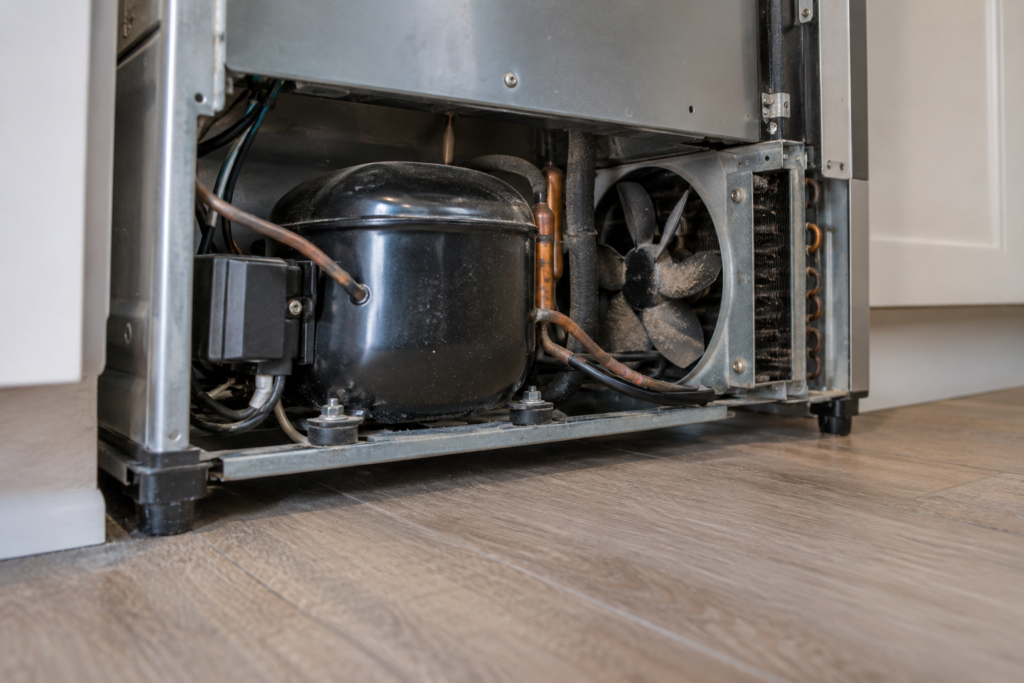
KitchenAid Ice Machine Compressor Repair vs Replacement: Which Makes Sense?
Repair when the fault is in the start circuit or the overload, and compare costs when the compressor itself has failed. The CP page lists a failed start relay or capacitor first, and describes an internal compressor motor failure as a sealed-system repair approaching replacement cost. A relay is a small part. A sealed-system job is not, and our refrigerator compressor replacement cost guide puts sealed-system repair on a refrigerator from $595 because of the refrigerant handling involved.
We do not quote a compressor price for an ice machine on this site, so treat that refrigerator figure as a reference for how costly sealed-system work is, and wait for the written estimate. The comparison that matters is that estimate against the price of a new machine and the cost of making it fit your cabinet opening.
- Start circuit fault — repair; the machine is otherwise healthy.
- Overload tripped by a dirty condenser — clean it, and repair only if it still will not start.
- Failed compressor on a young machine — compare the estimate with replacement.
- Failed compressor on an old machine — lean toward replacing, because sealed-system work on an aging unit rarely pays back.
How Do You Protect the Ice and the Cabinet While You Wait?
Unplug the machine, empty the bin and keep the door or drawer closed as little as possible. A cabinet with a dead compressor warms to room temperature, so the ice melts and the meltwater can find the drain, the floor or the cabinet below.
- Discard soft or refrozen ice — ice that has partly melted is not worth keeping.
- Remove the water and ice from the bin — the CP page advises emptying it before service.
- Write down the history — when CP first appeared and any unusual sound or smell.
- Photograph the model and serial plate — so the technician has it before the visit.
A burning smell from the compressor area is a reason to stop at once and leave the machine unplugged.
Keeping It From Happening Again
The CP page names a dirty condenser as an indirect cause of compressor faults: the compressor overheats from poor heat rejection and eventually trips its overload. That makes two habits worth adopting, and both are cheap.
- Vacuum the condenser through the front grille — a few times a year, with the machine unplugged.
- Keep the surroundings cool — the page lists ambient temperature among the causes of overheating, so keep the opening ventilated and away from heat.
Making the Decision
Ask the technician which of the three causes it is, and ask for the test that shows it. A relay is a repair, an overload that recovers after cleaning is a repair, and a compressor that has failed inside is a decision. Our wine cooler compressor repair or replace guide treats the same question on a sister appliance, and our ice maker error codes guide lists the other codes.
The ice maker repair page lists what a visit covers. A diagnostic visit starts from $95, and the final price is confirmed after the on-site diagnosis, with a written estimate before any work begins. Book a visit or send us the model number and what you hear from the compressor before the technician arrives.